Trenton's Best Bat Removal
We've been voted Trenton's best bat removal company the past two years!
Get in touch
Bat Experts
Rapid Response
Trained & Educated
Licensed & Certified
About Trenton Bat Removal
Welcome to trentonbat.com. We are the only qualified bat removal company in Trenton, New Jersey. We're a licensed wildlife control company with expertise in removing bats legally and in a 100% effective manner. Whether these pests are hiding in your attic, have made their home in the walls of your home, have infested the basement and garage, or are just swarming in your property, bats are a nuisance. Apart from the fact that these animals are quite spooky, they also cause damage to your property with the bat guano and their droppings that leave ugly stains everywhere. But when it comes to getting rid of bats, the task isn't that easy and must be done by an expert only. That's because killing or poisoning any species of bats is illegal. We provide professional bat removal services for homes, offices, apartment buildings, and any type of residential or commercial property that's infested with bats. Our bat removal experts have years of experience in clearing properties infested with bats without harming the animals in any way at all. Plus, we do not trap the bats as well. If any wildlife animal is captured during the process, our team of experts ensures that the creature is safely transported to its natural habitat where it may spend the rest of its life in peace. In addition to this, after removing the entire bat colony from your property, we'd also decontaminate the space and clean all the surfaces filled with bat guano. After our experts have finished the job, you'd be left with a home that isn't just free of bats, but also clean, fresh, and without any lingering smell of bats! We operate 24-7-365, so don't hesitate to call us at 609-913-9990 to discuss your bat problem and schedule a fast appointment.
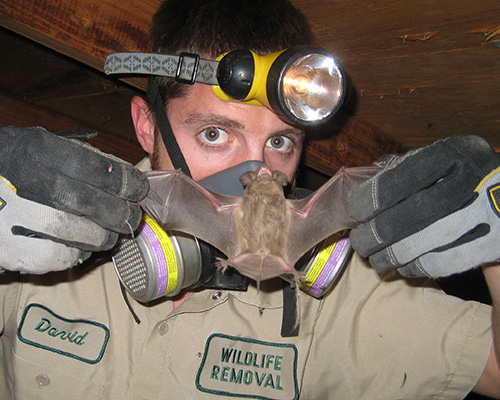
Residential
We are experts at removing bats from residential properties. Whether you have a single bat trapped in your house, a colony roosting in your attic, and/or various other problems, there is no need to worry! During our removal process, we make sure to inspect your entire home carefully, tracking down all the entrypoints bats are using to invade your place. Next, we perform a process called live exclusion (where no bats are harmed and all exit your property), then seal all entry holes completely shut. We also take care of the cleanup process after, so your home is safe and clean!
Learn MoreCommercial
Besides residential areas, we also have a wealth of experience removing bats from commercial properties! We begin by investigating the area for possible bat entrances, covering holes even as small as 1/4 of an inch. Through our live exclusion process, bats leave the building through one-way exits, and we seal up every hole afterward. Once the bats have been removed, we perform a cleanup process. This includes dealing with guano, replacing damaged insulation, and decontaminating the place.
Learn More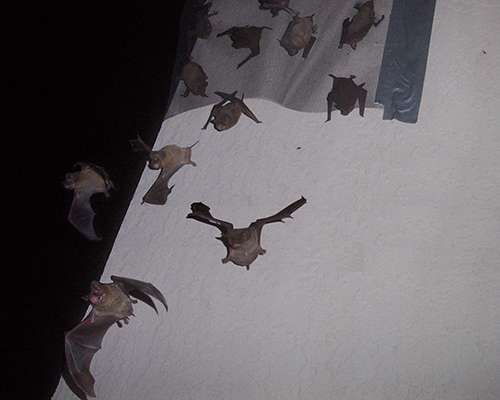
Contact us for bat removal today!
What Our Customers Say
I had a bat flying around in my house at 9pm, and CITY bat removal came right out and caught it in a net.
Sarah Lakewood
I had an annoying colony of bats stuck in my attic for a while before I finally decided to call for help. They were able to quickly and thoroughly solve the problem!
Brandon Chung
They did a great job clearing my attic of bats and didn't hurt any of the creatures.
Charlotte Demers
The technicians at CITY Bat Removal are skilled, professional, and know exactly what they're doing. Would highly recommend.
Mark O'Connor
My house stank of bats and their guano inside my wall. CITY Bat Removal not only removed the bats, they also got rid of the smell!
Alexis Ramirez
.jpg)
Will a bat in the attic have a nest of babies?
Problems with Bats in the AtticBats can cause a lot of problems when they show up in your attic. These animals can spread deadly diseases like rabies and histoplasmosis — a fungus that damages the lungs.
Bat guano is also corrosive, allowing it to do a lot of structural damage to your home. That's not even mentioning the smell and stains it leaves behind.
That's why you want to remove the bats as soon as possible, but you're worried about them having pups with them.
Bat Biology
Despite looking a lot like rats, these flying mammals have a totally different reproductive cycle. They don't breed and multiply rapidly the way rodents do. In fact, most female bats only have a single pup a year.
That's why bats put a lot of emphasis on protecting and raising their young. As failure to do so means their population will quickly plummet.
Bats only mate once a year, during the fall. Yet their incredible biology allows the female to migrate or hibernate through the winter without getting pregnant. That way, the female bat only enters their gestation period in the spring when there are more resources.
That's why bat pups often show up in April, May, or June.
Maternity Colonies
To help raise their single child, female bats decide to group up and form a colony with the aim of collectively protecting all their children. This is called a maternity roost. These bats will work together to provide their children with food, as well as to protect them from external danger.
These colonies often form in dark areas with easy access to the sky, like caves and attics. That's why most bat-infested attics have maternity colonies. Meaning they also have bat pups with them.
Removing Bat Colonies with Baby Nests
There are many ways to remove a nest of adult bats, but it's much more difficult to remove bats when children are involved.
Part of this has to do with the laws surrounding bats. These animals are great at killing insects. That's why their presence kills off many disease-carrying bugs and agricultural pests. This is why the government would like to let them continue doing their job. This is also affected by the bat's status as an endangered animal.
Removing bats while they have pups in their nest is also very inhumane. In the worst case, you'd use a lethal approach and kill all the poor animals. In the best case, the adults are excluded from your home and the children are left to starve to death.
Since there is no good way of removing bats when there are babies, your only option is to wait. Simply let the bats remain for a few weeks until the children become independent adults, then use an exclusion technique.
Better yet, you could call a professional to get their advice and have them remove the bat for you!
Preventing Bats
Since you can't remove bats from your attic when they have babies, you should try to prevent that scenario from happening in the first place. This means taking preventative measures to stop bats from entering your attic and giving birth to their young.
The best way of doing this is by inspecting your entire home and looking for holes and gaps that the bats can use. These could act as small entry points, so it's important to seal them up so bats can't physically get inside your home. These gaps often appear in your walls or in your roof.
The chimney is another vulnerability, so you should install a chimney cap if you don't have one already.